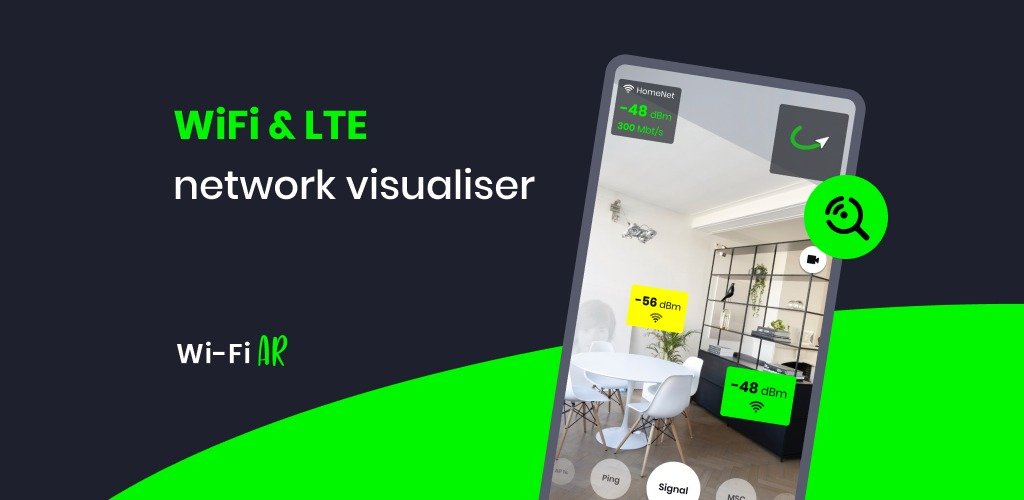
WiFi has become an essential part of our modern lives it powers our smartphones, laptops, and smart home devices every single day. But have you ever wondered what WiFi actually looks like as it moves through your home or office? The truth is, WiFi signals are invisible to the naked eye. However, with the help of WiFi AR (Augmented Reality) apps, you can now see these invisible signals in real-time through your phone’s camera.
These fascinating apps use AR technology to turn invisible data into visual shapes and colors that show how strong your WiFi connection is and where it becomes weak. They make it easier to understand how WiFi flows around walls, furniture, and other obstacles helping you improve your internet experience instantly.
What are How WiFi AR Apps Let You See Invisible Signals
WiFi AR apps are special mobile applications that use augmented reality to show WiFi signal strength and distribution visually. Using your smartphone’s camera, these apps overlay colorful patterns or lines on your real-world surroundings to represent the intensity of your WiFi signals.

In simple terms, when you open a WiFi AR app, it scans the WiFi signal in your area and displays it as visual graphics on your screen. For example, blue colors might show strong signals, while red areas could mean weak or no connection. This gives users a clear understanding of how their WiFi network performs across different parts of their home or office.
How are How WiFi AR Apps Let You See Invisible Signals Work
The working of WiFi AR apps is quite fascinating but easy to understand. These apps combine WiFi scanning technology with augmented reality visualization to show the invisible wireless signals around you.
Here’s how it works step by step:
Signal Scanning:
The app first scans your WiFi network using your phone’s built-in hardware to detect signal strength and quality.AR Mapping:
Once it collects the signal data, the app overlays visual effects such as waves, colors, or 3D patterns on your camera view to represent the WiFi signal strength in that area.Visualization:
As you move around, the visuals change based on your proximity to the router or interference points. This allows you to spot weak zones or areas where the WiFi doesn’t reach properly.Optimization Help:
By identifying these weak spots, users can easily reposition their routers, adjust antennas, or use extenders to improve overall coverage.
Essentially, WiFi AR apps make invisible signals visible helping you build a smoother and stronger internet experience.
Features of How WiFi AR Apps Let You See Invisible Signals [Completely Detailing]
Here are some of the most exciting and useful features these apps offer:
Real-Time Signal Visualization: Instantly shows WiFi strength as you move your phone.
3D Augmented Reality View: Uses advanced AR effects to display signal flow and coverage in a lifelike way.
Color-Coded Strength Indicators: Helps you easily spot strong and weak areas using intuitive color designs.
Interference Detection: Detects areas affected by obstacles such as walls, doors, or electronic devices.
Network Analysis: Provides technical information like speed, latency, and signal-to-noise ratio.
Device Connection Tracking: Shows which devices are connected to your network and where they are positioned.
User-Friendly Interface: Simple controls and clean visuals make it suitable for both beginners and professionals.
Pros of How WiFi AR Apps Let You See Invisible Signals
| Pros | Description |
|---|---|
| Visual Understanding | Helps users actually see WiFi signal strength visually. |
| Easy Optimization | Makes it easy to find dead zones and improve coverage. |
| Fun and Interactive | Adds a creative, futuristic way to study your WiFi environment. |
| Time-Saving | Quickly identifies signal problems without complex tools. |
| Educational | Teaches users how WiFi behaves in physical spaces. |
Cons of How WiFi AR Apps Let You See Invisible Signals
| Cons | Description |
|---|---|
| Limited Accuracy | Some apps may not measure signals with high precision. |
| Device Compatibility | Older phones may not support AR features. |
| Battery Usage | Constant scanning and camera use drain the battery faster. |
| Privacy Concerns | Some apps require WiFi access permissions, raising security concerns. |
| Premium Features | Many useful functions may be locked behind paid versions. |
How WiFi AR Apps Let You See Invisible Signals Alternatives [Use Table]
| Alternative App | Main Function | Platform |
|---|---|---|
| NetSpot | Advanced WiFi analysis and mapping | Android / iOS |
| WiFi Analyzer | Detects signal strength and interference | Android |
| Speedtest by Ookla | Tests speed and connection quality | Android / iOS |
| WiFiman | Monitors and maps WiFi networks | Android / iOS |
| Network Analyzer | Full network diagnostic tool | iOS |
Conclusion and Verdict: How WiFi AR Apps Let You See Invisible Signals
WiFi AR apps are more than just tech gadgets they’re innovative tools that make the invisible visible. By using AR technology, these apps provide a fun, interactive, and educational way to understand how your WiFi network works. Whether you’re setting up a new router, troubleshooting connection issues, or just curious about your home network, these apps can give you a clear visual guide to signal strength and coverage.
For iphone
For Android
In short, WiFi AR apps help you transform guesswork into understanding, making them a must-have for anyone who values a strong and stable internet connection.
How WiFi AR Apps Let You See Invisible Signals
WiFi AR apps open a window into the invisible world of wireless networks. With their easy-to-use design and impressive technology, they bring something futuristic into our everyday digital lives. If you’ve ever wanted to see your WiFi in action, these apps are your perfect starting point.